Handouts & Resources
.
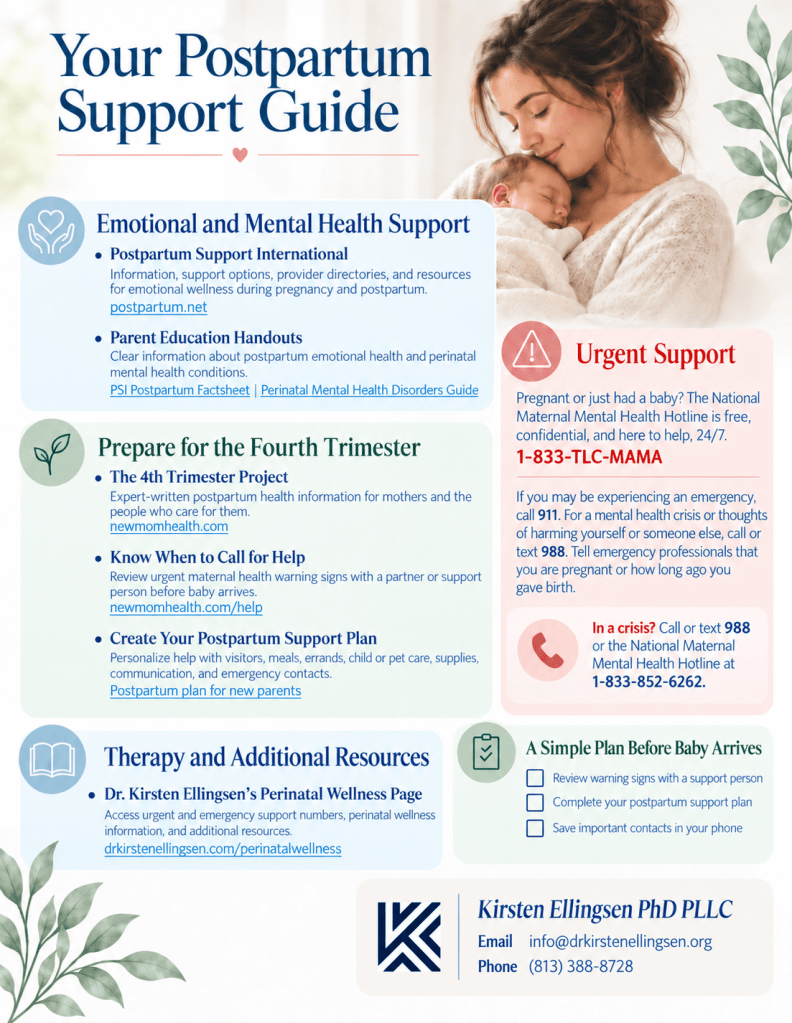
Immediate Help
24 Hour Helplines
National Suicide Prevention Lifeline
Suicide Prevention Hotline
National Postpartum Depression Warmline
Perinatal Wellness

Downloadable Handouts
Helpful Links
Perinatal Wellness Blog Posts

Perinatal Depression: Signs, Symptoms, and Where to get Support
During pregnancy and postpartum women are particularly vulnerable to anxiety and depression. The perinatal period (conception-1 year delivery) is a time of significant hormone and identity change. Read More.
By Dr. Ellingsen
Children and Teens

Downloadable Handouts
Blogs
Helpful Links
Children and Teens Blog Posts

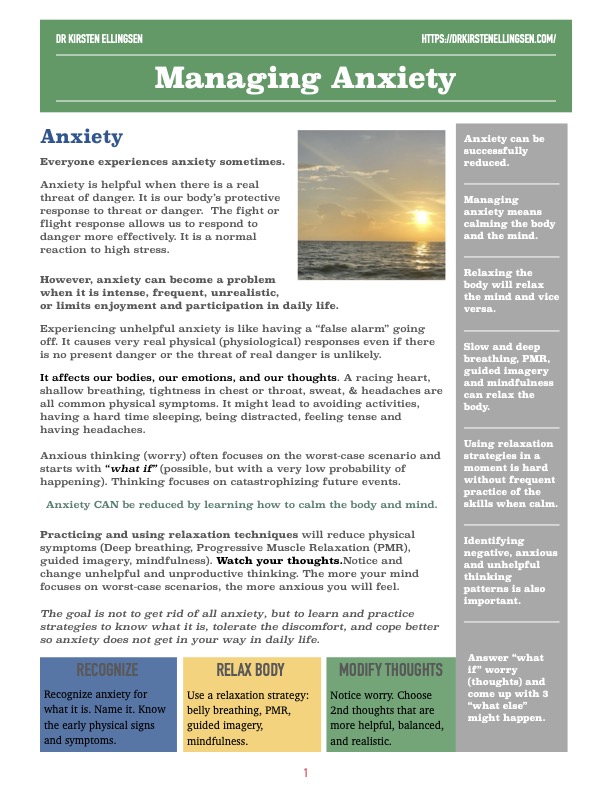
Teens and Panic Attacks: What are they and What to Do
Anxiety is a normal and expected part of life. It keeps us safe when there is danger or a threat of danger. Read More.
Dr. Kirsten Ellingsen

Do you know that the way you breathe can influence how you FEEL, how you THINK, and and how you ACT? Stress, anxiety, and anger can activate our fight or flight response. Read More.
Dr. Kirsten Ellingsen

Uncertainty is unavoidable in daily life. Not being able to tolerate uncertainty is a sure path to increased worry and anxiety. Read More.
Dr. Kirsten Ellingsen

Reducing Teen Anxiety Using the Three R’s: Recognize, Relax, Re-think
Being a teenager can be hard. At times, very hard. Physical changes, academic demands, and different social or romantic pressures create new challenges and potential areas of stress. Read More.
Dr. Kirsten Ellingsen

Keeping Teens Safe and Supported: What to Know About Depression
Everyone feels sad or discouraged at times. These are normal and expected emotions. Read More.
Dr. Kirsten Ellingsen

Identifying Attention Deficit Hyperactivity Disorder (ADHD) in Young Children
Attention Deficit Hyperactivity Disorder (ADHD) is one of the most commonly diagnosed behavioral disorders in childhood. Read More.
Dr. Kirsten Ellingsen

Autism is now one of the most commonly diagnosed developmental disabilities in early childhood. Read More.
Dr. Kirsten Ellingsen
Parenting

Downloadable Handouts
/
Helpful Links
Parenting Blog Posts

Better Communication with Teens
Communication is key to building a healthy relationship during the teenage years. Below are a few suggestions for how to connect and improve communication with your teen. Read More.
Dr. Ellingsen

Reduce the Rage: Managing Anger Better
Anger is a healthy and normal emotion. Everyone gets angry, but not everyone expresses it well. This is the second in a two- part blog series on Managing Anger with Recognizing and Resetting. Read More.
Dr. Ellingsen

Staying Regulated
It is understandable that many children and adults are experiencing higher levels of anger, frustration, anxiety and sadness. Uncertainty remains and there is a considerable emotional toll generally. Read More.
Dr. Ellingsen
Subscribe for updates and handouts.
Need help?
Get in touch
Kirsten Ellingsen, PhD, PMH-C
Sarasota, Florida: 2415 University Parkway, Building 3, Suite 219, Sarasota FL 34243
South Tampa, Florida: 3314 Henderson Blvd, Suite 305, Tampa FL 33609
(813)-388-8728
Connect

-
Identifying Attention Deficit Hyperactivity Disorder (ADHD) in Young Children
ADHD can profoundly affect children’s educational performance, wellbeing, and social interactions (American Academy of Pediatrics, 2011). Common referral concerns for ADHD include exhibiting behaviors such as high activity level, impulsivity, and poor attention. Read more
-
Reducing Teen Anxiety Using 3 R’s: Recognize, Relax, Re-think
Being a teenager can be hard. At times, very hard. Physical changes, academic demands, and different social or romantic pressures create new challenges and potential areas of stress. Read more
-
Keeping Teens Safe and Supported: What to Know about Depression
Everyone feels sad or discouraged at times. These are normal and expected emotions. Mood can be up and down throughout a day. However, when mood remains low for an extended period of time and behaviors change it could indicate something more going on. Read more