Perinatal Wellness
Dr. Ellingsen is committed to supporting perinatal wellness and providing resources for pregnant and postpartum women.
See Article in Tampa Bay Parenting Magazine: https://tampabayparenting.com/supporting-moms-mental-health-matters-16373/
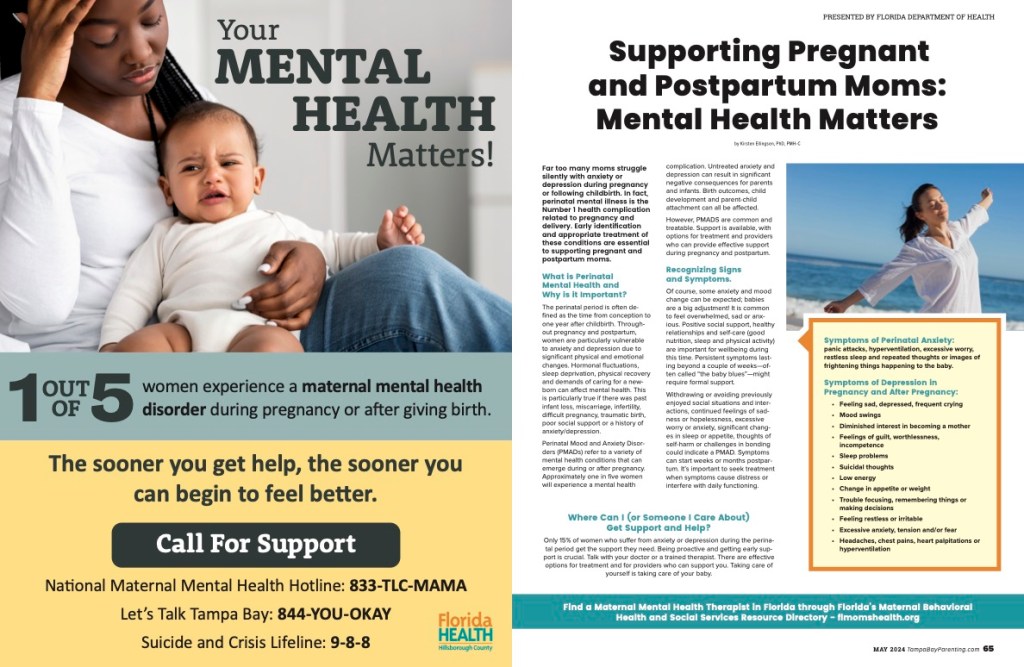
What is a PMAD?
A PMAD is a perinatal mood and anxiety disorder.
During pregnancy and postpartum women are particularly vulnerable to developing a PMAD.
- The perinatal period (conception-1 year delivery) is a time of significant hormone and identity change
- While worry and anxiety is common; significant anxiety during pregnancy is related to higher rates of postpartum depression and comes with some lasting effects for mothers, infants, and families.
- A PMAD lasts longer than the commonly experienced “Baby Blues” and can significantly negatively affect functioning
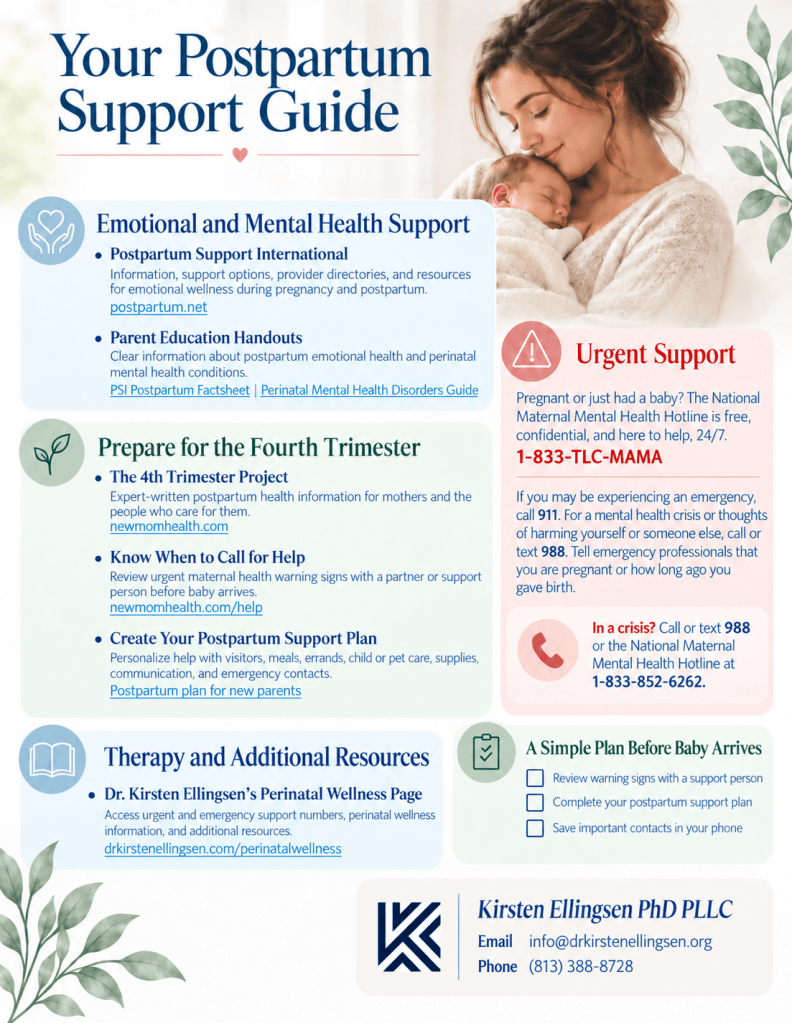
Where to find Support?
If you or someone you know is experiencing depression symptoms or wants additional support during pregnancy or after delivery, please talk with a physician or trained therapist.
Suicide & Crisis Lifeline
National Hopeline Network
National Postpartum Depression Hotline
Postpartum Support International Warmline
Scroll down for free downloadable resources and more information on perinatal anxiety and depression.

Supporting Development

Strengthening Connections

Enhancing Health & Well Being
PMAD and COVID-19
Rates of anxiety and depression during pregnancy have found to more than doubled in the COVID-19 pandemic.
Resources
Screening for PMADS
Linked below are screening instruments that can be completed and shared with an OBGYN, Primary Care Physician or Therapist.
The Edinburgh Postnatal Depression Scale (EPDS)
The Perinatal Anxiety Screening Scale (PASS)
Provider Directories
Self Care for Moms
PMAD Symptoms
A PMAD or the “Baby Blues”?
A PMAD is not the commonly experienced “Baby Blues”.
- While approximately 60% of new mothers experience the “Baby Blues” the first few weeks after giving birth, a PMAD lasts longer and can significantly negatively affect functioning in daily life.
“Baby Blues” Symptoms
- Crying often and not always for a reason
- Feeling very tired
- Having trouble falling asleep or having trouble staying asleep
- Having trouble thinking clearly, or feeling out of touch
- Feeling very nervous around the baby
- Becoming easily annoyed and/or angry and not understanding why
- Feeling that nothing will ever be the same
- Not feeling like yourself

Perinatal Depression
Perinatal depression is one of the most common medical complications for mothers.
- With approximately half of all pregnant women experiencing anxiety and depression symptoms, it is important to help increase awareness of signs and spread the word about available resources.
Depression During Pregnancy
Symptoms and risk factors for developing depression during pregnancy:
Symptoms
Mood/Behavior
- Feeling sad, depressed
- Feeling restless or irritable
- Feeling worthless or guilty
- Not feeling like a good mother
- Crying frequently
- Suicidal thoughts
- Diminished interest in becoming a mother
- Strong anxiety, tensions
- Fear either about your future child or other things
Physical
- Sleep disturbances
- Low energy, fatigue
- Change in appetite
- Trouble focusing, remembering things
- Chest pains or heart palpitations
- Headaches
- Numbness
- Hyperventilation
Risk Factors
Maternal anxiety
Lack of social support
Smoking
Life stress
History of depression
Unplanned pregnancy
Lower income
Lower education
Domestic violence
Single status
Poor relationship quality
Postpartum Depression
Symptoms and risk factors for developing postpartum depression:
Symptoms
Mood/Behavior
- Feeling sad, depressed
- Feeling restless or irritable
- Feeling inadequate to cope with new infant
- Feelings of guilt or worthlessness
- Intense anxiety; rumination, obsessions
- Excessive worry about baby’s health
- Crying frequently
- Suicidal thoughts
Physical
- Sleep disturbances
- Low energy, fatigue
- Change in appetite
- Trouble focusing, remembering things
- Chest pains or heart palpitations
- Headaches
- Numbness
- Hyperventilation
Risk Factors
Depression during pregnancy
History of depression
Anxiety during pregnancy
Life stress
Lack of social support
Traumatic birth experience
Preterm birth
Breastfeeding problems
Infant admission to Neonatal Intensive Care

You may not control all the events that happen to you but you can decide not to be reduced by them.
Maya Angelou
Subscribe to receive updates and handouts.
Need help?
Get in touch
Kirsten Ellingsen, PhD, PMH-C
Sarasota, Florida: 2415 University Parkway, Building 3, Suite 219, Sarasota FL 34243
South Tampa, Florida: 3314 Henderson Blvd, Suite 305, Tampa FL 33609
(813)-388-8728
Connect

-

Staying Regulated
Staying Regulated It is understandable that many children and adults are experiencing higher levels of anger, frustration, anxiety and sadness. Uncertainty remains and there is a considerable emotional toll generally. It is no wonder that it might be harder for children or parents to stay calm and manage strong emotions. How do you help your child… Read more
-

Uncertainty
Uncertainty is unavoidable in daily life. Not being able to tolerate uncertainty is a sure path to increased worry and anxiety. Learning how to better accept and cope with uncertainty is possible with practice. Strategies that can help are outlined below. Read more
-

PMADS: Perinatal Depression: Signs and Where to Get Support
During pregnancy and postpartum women are particularly vulnerable to anxiety and depression. The perinatal period (conception-1 year delivery) is a time of significant hormone and identity change. While worry and anxiety is common; significant anxiety during pregnancy is related to higher rates of postpartum depression and comes with some lasting effects for mothers, infants, and… Read more